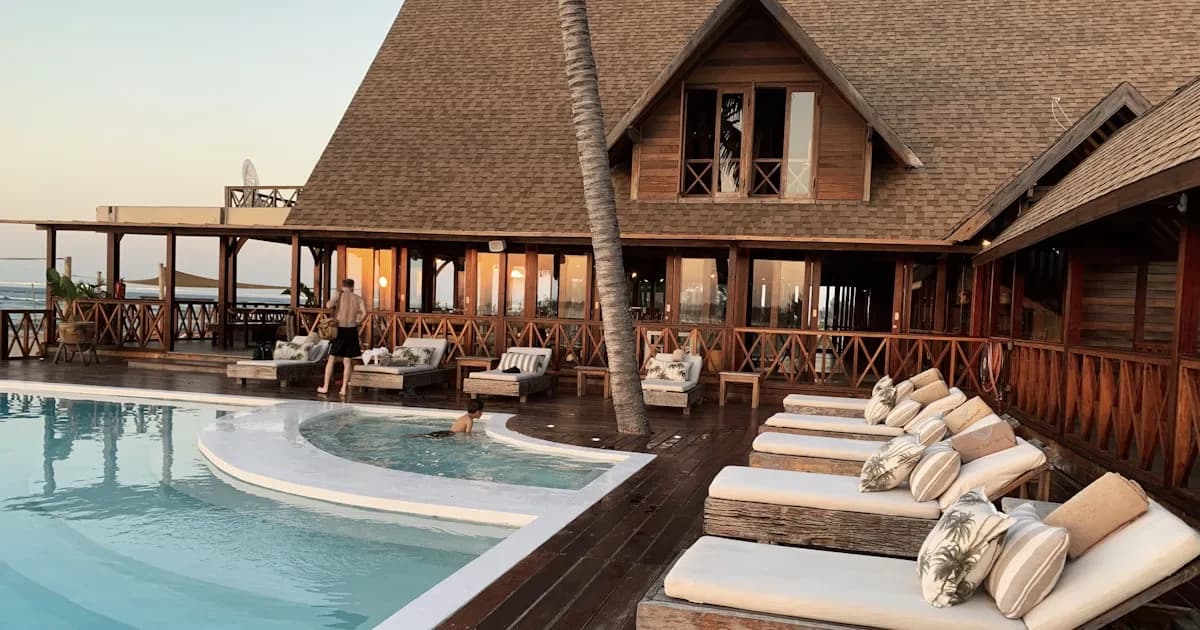
The All-Inclusive Is Eating the Mediterranean - And Independent Hotels Are Dying
Drive along the coastline of Antalya, Hurghada, or Hammamet and count the independent restaurants. Then compare that count to what existed fifteen years ago. The number has collapsed - not because the food got worse or tourists stopped eating, but because the all-inclusive resort model has systematically vacuumed spending out of local economies and trapped it behind wristband-controlled buffet lines. The independent hotel sector across the Mediterranean is dying the same slow death, and the industry is sleepwalking through it.
The all-inclusive model is not inherently evil. For families managing budgets and travelers who value predictability, it solves real problems. But the externalities it imposes on destination economies are devastating, and the rate at which it is expanding across previously diverse hospitality markets should alarm anyone who cares about the long-term health of Mediterranean tourism.
The Numbers Are Brutal
According to the World Tourism Organization's 2025 Mediterranean Tourism Report, all-inclusive properties now account for 43% of total bed capacity along the Turkish Riviera, 38% in Tunisia, 35% in Egypt's Red Sea coast, and a growing 22% in Greece - a market that was almost entirely independent as recently as 2010.
The growth trajectory is what matters. Greece's all-inclusive share was 8% in 2015, 14% in 2020, and 22% in 2025. At that rate, it will cross 30% by 2030. Spain's Balearic Islands, long resistant, saw all-inclusive capacity grow by 47% between 2020 and 2025 as international hotel groups acquired and converted independent properties.
Here is the critical economic impact: a guest staying at an all-inclusive resort spends an average of 11 euros per day outside the property, according to a 2024 study by the European Travel Commission. A guest at a bed-and-breakfast or independent hotel spends an average of 72 euros per day in the local economy - at restaurants, shops, taxis, attractions, and markets.
That is a 6.5x multiplier difference. For a destination receiving 500,000 all-inclusive guests per season instead of independent travelers, the leakage from the local economy is staggering - roughly 30 million euros per season that stays inside resort walls instead of circulating through the community.
How the Squeeze Works
The all-inclusive model does not just compete with independent hotels. It fundamentally restructures the destination's economic ecosystem.
Phase 1: Price Compression
All-inclusive resorts operate on volume economics. A 500-room all-inclusive in Antalya can offer a week's accommodation with all meals and drinks for 600 to 800 euros per person. An independent 30-room boutique hotel in the same area cannot match that headline price even for room-only, because its per-unit costs are dramatically higher. The independent hotel is not competing on price - it is competing in a different category. But OTAs and metasearch engines display them side by side, and the consumer sees: "Why would I pay 120 euros per night without meals when I can pay 90 euros per night with everything included?"
Phase 2: Restaurant Ecosystem Collapse
When 40%+ of a destination's tourists eat every meal inside their resort, the local restaurant market contracts violently. The taverna owner who once served 80 covers per night in July now serves 30. Margins thin. Quality drops because good ingredients cannot be purchased in smaller quantities at the same price. The best chefs leave for resort kitchens that offer stable employment. Within a few years, the restaurants that remain cater primarily to the 11-euro-per-day crowd - offering cheap, tourist-grade food that reinforces the perception that eating outside the resort is not worth it.
This is a death spiral. As the independent dining scene deteriorates, all-inclusive resorts can point to it as a selling feature: "Why risk a mediocre meal in town when everything is included here?"
Phase 3: Supply Chain Capture
Large all-inclusive operators negotiate directly with food and beverage distributors, often importing in bulk rather than sourcing locally. A 2023 analysis by the Mediterranean Institute of Tourism found that all-inclusive resorts in Turkey source only 23% of their food from local producers, compared to 61% for independent hotels. The local supply chain - farmers, fishermen, artisan producers - loses its primary market. Agricultural diversity in tourism regions declines as local producers cannot compete with the resort's international supply contracts.
Phase 4: Property Conversion
As independent hotels struggle with compressed margins and reduced foot traffic from the declining street-level economy, many are sold. The buyers are almost always hotel groups looking to convert them to all-inclusive or large-scale operations. Between 2020 and 2025, approximately 2,200 independent hotels across Greece, Turkey, and Spain were either acquired by chains, converted to all-inclusive, or closed permanently, according to Eurostat hospitality sector data.
The Cultural Flattening
Beyond economics, all-inclusives are producing a monoculture of tourist experience that erodes what made Mediterranean destinations distinctive in the first place.
A traveler in an all-inclusive in Crete has an experience functionally identical to one in an all-inclusive in Bodrum or Monastir. The buffets feature the same international cuisine. The animation teams run the same pool games. The evening entertainment follows the same formula. The only thing that changes is the view.
The paradox of the all-inclusive Mediterranean is that travelers choose these destinations for their culture, food, and character - and then stay in properties specifically designed to insulate them from all three.
This is not snobbery. It is an observation about long-term destination viability. When the authentic, street-level character of a place is hollowed out, the destination loses its competitive differentiation. Tourists who wanted "the Mediterranean experience" start choosing other regions entirely, because the Mediterranean they find is just a resort compound that happens to be near a sea.
What Independent Hotels Can Actually Do
Complaining about all-inclusives accomplishing nothing. Independent operators need to compete on axes where the all-inclusive model structurally cannot.
Hyper-local authenticity. Your advantage is that you are part of the community, not walled off from it. Partner with local restaurants, offer curated food tours, connect guests with producers and artisans. Make the destination's living culture the product you are selling - something a 500-room compound simply cannot replicate.
Experiential packaging. Do not sell a room. Sell a story. Three nights including a cooking class with a local grandmother, a guided hike to a village that is not in any guidebook, and dinner at a restaurant where the fisherman brings the catch to the table. The all-inclusive guest gets a buffet. Your guest gets a memory.
Direct booking economics. Independent hotels paying 20% OTA commissions are competing with one hand tied behind their back. Invest aggressively in direct booking channels. A 15% saving on distribution costs can be the difference between viability and closure.
Collaborative marketing. Forty independent hotels marketing individually have zero visibility against a Marriott or TUI. Forty independent hotels forming a destination marketing cooperative and pooling budgets can compete for attention. This model works in wine regions and is beginning to work in hospitality - look at the Mr. & Mrs. Smith, Small Luxury Hotels, and Relais & Chateaux networks.
The Policy Failure
Governments in Mediterranean tourism-dependent countries have largely failed to address this structural shift. Planning permissions for large all-inclusive developments continue to be granted, often with tax incentives, while independent operators face the same regulatory burden as mega-resorts with none of the scale advantages.
Some jurisdictions are beginning to act. The Balearic Islands introduced restrictions on all-inclusive advertising in 2024. Croatia requires resorts above a certain size to source a minimum percentage of food locally. But these are isolated measures, and enforcement is inconsistent.
The economic argument for policy intervention is strong: independent hotels and the ecosystems they support generate 2.3 to 3.1x more local employment per tourist euro than all-inclusive resorts, according to the International Labour Organization's 2024 tourism employment report. Protecting the independent sector is not nostalgia - it is sound economic development policy.
The Clock Is Ticking
The Mediterranean's tourism identity was built by independent hoteliers, family restaurateurs, and small-scale operators who created the experiences that made these destinations famous. That identity is being eaten alive by a model that prioritizes volume over value, containment over community, and shareholder returns over destination health.
If you run an independent hotel in the Mediterranean, this is not an abstract industry trend. It is an existential threat. And the response cannot be to keep doing what you have always done while hoping the all-inclusive tide turns on its own. It will not.
Adapt aggressively, collaborate loudly, and make the case - to your guests, your community, and your government - that the Mediterranean worth visiting is the one you can actually experience, not the one behind a wristband.