Belgium Is Burning and Northern Hotels Still Think Wildfire Is a Greek Problem
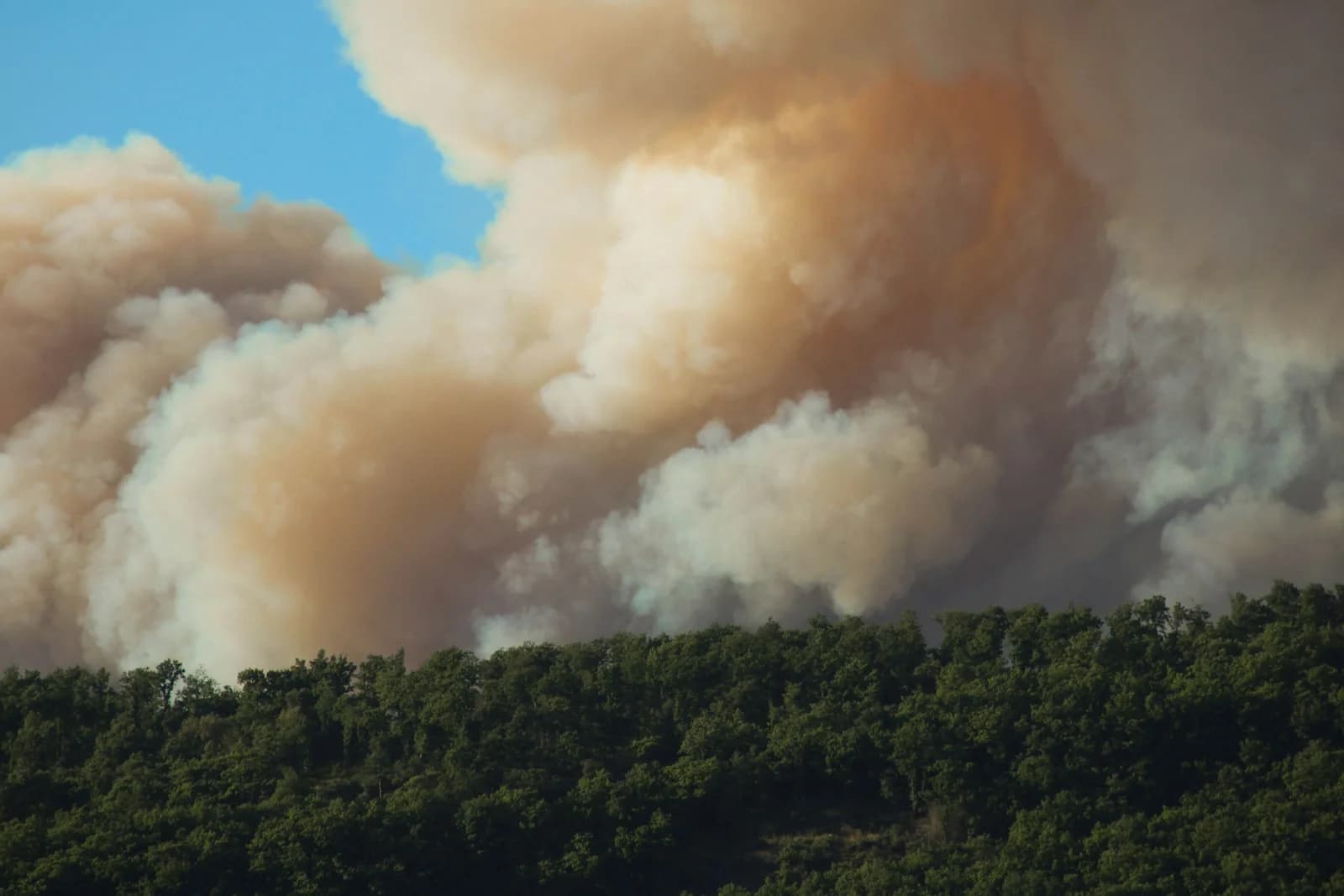
Belgium just set its wildfire record. Around 30 square kilometres of the High Fens burned in three days, more than double the previous worst fire in the same reserve, and a country with almost no aerial firefighting capability of its own had to pull the EU civil protection alarm and ask Sweden for water bombers.
If you run a property north of the Alps, stop reading this as a Greece story. It isn't one.
What actually happened
The fire broke out Friday in the Hautes Fagnes near Eupen, in Liège province a few kilometres from the German border. By Saturday the wind turned, smoke pushed into Waimes and Bütgenbach, and roughly 600 residents were told to get out. Tourists were advised to leave. A gymnasium in Malmedy opened as a shelter. A children's summer camp was cleared.
By Sunday there were more than 250 emergency personnel on it, including over 100 Belgian and German crews, plus police, military and civil protection. Sweden sent two water-bombing aircraft. The Netherlands sent two helicopters, Czechia one. The chief engineer from the forestry department described a kilometre-long fire line advancing slowly toward a municipal forest and said flatly that the situation was extremely difficult and they needed helicopter support.
None of that is unusual for August in the Mediterranean. All of it is unusual for Belgium.
And Belgium wasn't alone this weekend. In Germany, the Hürtgen forest fire forced about 2,000 people out of the village of Gey on Friday. In France, the Landes fire hit 17 square kilometres with 650 people evacuated, the third major fire in the southwestern pine forests this summer, after a Gironde blaze that burned 420 square kilometres and moved 220,000 people. In the UK, crews were working 14 separate wildfires in South Wales with military support, days after the country recorded 38.1C.
That's four northern European countries with active evacuations in one weekend.
The thing most operators get wrong
Ask a hotel north of the Alps what their wildfire plan is and you'll usually get one of two answers. Either there isn't one, or it's an evacuation procedure lifted from the fire safety file, which is a document about a kitchen fire in your building.
Both are the wrong shape for this risk.
The flames almost certainly aren't coming for your property. What comes for your property is smoke, road closures, and a week of cancellations while nothing near you is actually on fire. That's the scenario, and it's the one nobody has written down.
Smoke travels far further than fire. German authorities in Monschau said on Sunday the Belgian blaze wasn't expected to cross the border, but the smoke was. Guests with asthma, small children and elderly parents don't care about your distance from the fire line. They care about whether the air outside your terrace is breathable and whether you'll tell them the truth about it.
If you've never had to answer "is it safe to breathe out there" at 7am with a lobby full of people, you will improvise badly. Everyone does.
Peat doesn't go out when the flames do
Here's the detail that matters most for anyone in northern Europe, and it barely made the coverage.
The High Fens is heathland over peat bog. A spokesperson for the Walloon public service said the problem this time was much deeper because the soil is so dry. Peat burns underground. It smoulders for days or weeks after the visible fire is declared contained, and it can resurface metres from where anyone was watching.
Which means the "it's over, come back" moment you're waiting for is not when the news stops running pictures. Ardennes, Eifel, the Pennines, the Scottish moors, the Dutch heaths: these are peat and heath systems, and after weeks of drought they behave nothing like a Provence pine forest. They stay hot.
If you rebook a group into a smouldering region because a headline said the fire was contained, and the smoke comes back, you own that. Not the fire service.
"Tourists were advised to leave" is the phrase that wrecks your week
Read that line again from the Belgian reporting. Residents were ordered out. Tourists were advised.
That gap is where your Saturday disappears. An order gives you cover with insurers, with OTAs, with guests demanding refunds. An advisory gives you nothing except a lobby full of people asking a duty manager to make the call for them.
So make the call in advance, in writing, before the season. Decide now what triggers your own guest advisory, independent of what the authorities say. Air quality index above a set number. A road on your only access route closed. An evacuation order in an adjacent municipality. Pick the numbers, put them in a one-page document, and give your duty managers permission to act on them without waiting for a director to answer the phone at 4am.
The properties that handle this well are never the ones with the thickest crisis binder. They're the ones where a 24-year-old on night shift knew they were allowed to decide.
What to have ready before next weekend
Four things, none of which take a budget.
A cancellation stance you've actually written down. Decide whether you waive fees on an advisory or only on an order, publish it, and stop negotiating it guest by guest at the desk. Ad hoc generosity under pressure costs more than a clear policy and buys less goodwill.
A single owned channel you update. One page on your site, timestamped, linked from your booking confirmation email. When a region burns, guests search and find rumours. Be the source. It also keeps your phone lines free.
An indoor plan for outdoor properties. If your product is a terrace, a pool, a hiking package or a bike hire desk, you need a version of the stay that works with the doors shut. Have it costed before you need it.
Rebooking, not refunding. Smoke events are short. A guest who cancels on Saturday will often take a date in October if you offer it in the same breath. Nobody offers it in the same breath, because nobody prepared the script.
Belgium's previous record fire was in 2011. This one was more than twice the size, and it happened in a country most operators would have called immune. The next one won't be in Belgium. It'll be somewhere else that thought the same thing.
Write the page now. It'll take an hour, and you'll use it.