The Thank-You Note That Turns One-Time Guests Into Lifetime Customers
Most hoteliers and STR owners think the booking battle ends at checkout. The guest leaves smiling, you move on to the next arrival, and you hope they'll remember you next time. Statistically, they won't. Phocuswright's 2024 traveler survey found that only 15-20% of hotel guests return to the same property - meaning 80% of your satisfied customers vanish into the OTA ecosystem, where you'll pay 15-25% commission to win them back.
A well-crafted thank-you note is one of the cheapest, most effective tools to change that ratio. Not a generic "hope you enjoyed your stay" email - a deliberate, personalized communication that converts a transaction into a relationship. The data backs it up, and properties doing it well are seeing measurable returns.
The Business Case: Why Post-Stay Communication Pays
This isn't about politeness. It's about economics.
According to Harvard Business Review, acquiring a new customer costs 5-7x more than retaining an existing one. Bain & Company's research shows that a 5% increase in retention can raise profits by 25-95%. In hospitality specifically, a Cornell Hospitality Quarterly study found that hotels with structured post-stay communication programs saw a 12-18% increase in repeat bookings within 12 months.
The math is straightforward. A 100-room hotel at 70% occupancy processes roughly 25,550 room nights per year. If 60% of those guests are first-timers arriving via OTAs at an average commission of 18%, the property pays approximately £330,000 annually in distribution costs. Converting even 10% of those first-time OTA guests into direct repeat bookers saves roughly £33,000 per year - from a program that costs virtually nothing to operate.
Expedia's own research confirms the opportunity: guests who receive a personalized post-stay message from a property are 40% more likely to consider that property for their next trip. The goodbye moment isn't the end of the guest journey - it's the beginning of the next one.
What Actually Works: Anatomy of an Effective Thank-You Note
Most hotel thank-you notes fail because they read like a template. "Dear Guest, thank you for staying with us. We hope to welcome you again soon." Polite, yes. Memorable, absolutely not. Guests can spot copy-and-paste politeness instantly, and generic messages get deleted or ignored.
An effective thank-you message has three qualities: it's personal, it's specific, and it creates a clear next step.
Template 1: The Post-Stay Email (Sent 24-48 hours after checkout)
Subject: The sunset terrace misses you already, Sarah
Hi Sarah,
Thank you for choosing to spend your anniversary weekend with us. We hope the terrace suite lived up to expectations - our team mentioned you spent most of Saturday evening enjoying the sunset views, and we couldn't agree more that it's the best seat in the house.
If you'd like to return, we'd love to offer you our direct guest rate - 10% below what you'll find on any booking site, plus a complimentary bottle of the Albariño you enjoyed at dinner. Just reply to this email or book at [direct link].
We'd also be grateful if you'd share your experience on TripAdvisor - it makes a real difference for a property our size. [Review link]
Warm regards, Maria, General Manager
Why it works: Uses the guest's name, references a specific detail from their stay (terrace, anniversary, wine choice), offers a tangible incentive to book direct, and asks for a review while the memory is fresh.
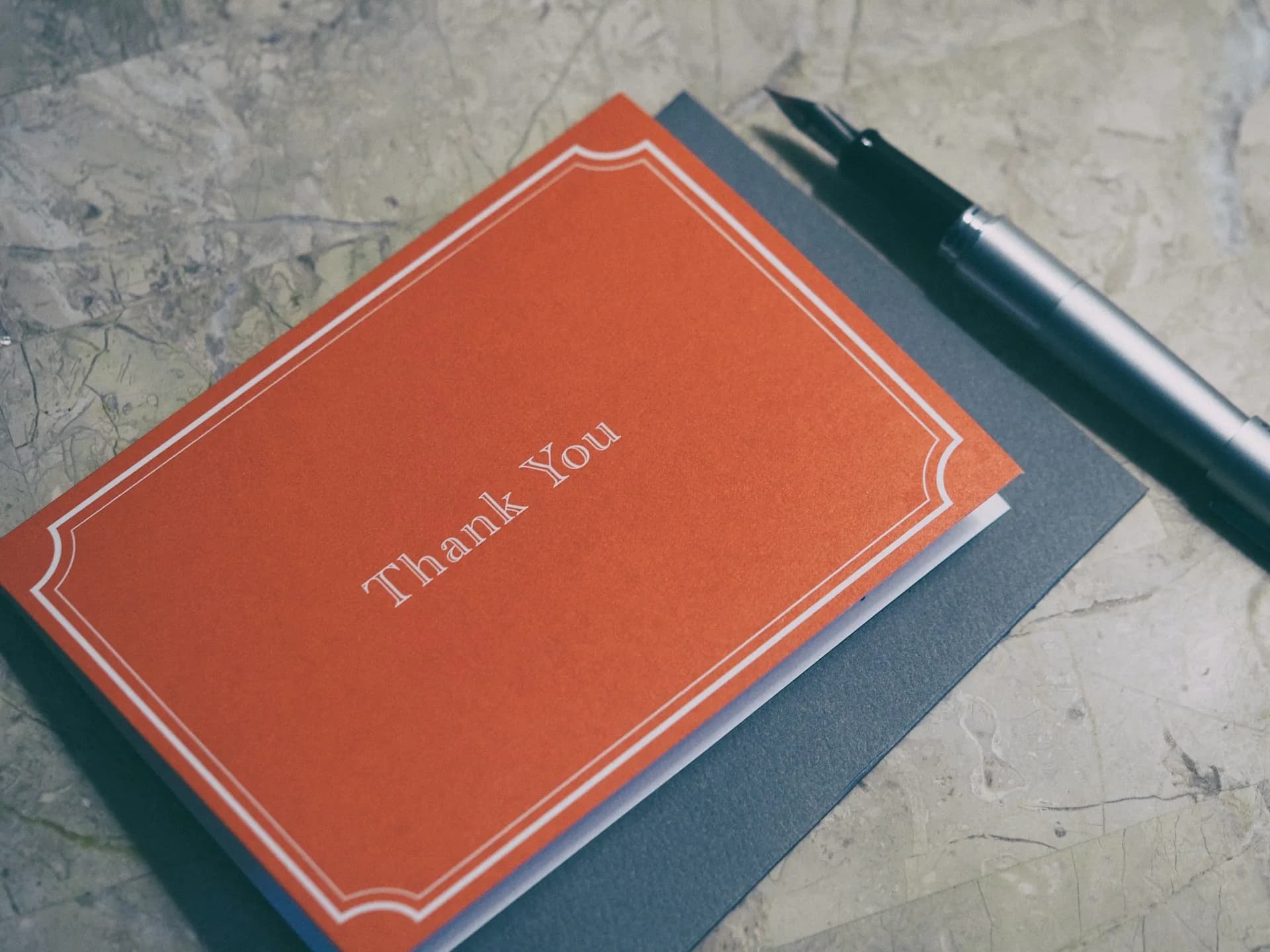
Template 2: The Handwritten In-Room Card (Left on departure day)
Sarah & James - congratulations again on your anniversary. We loved having you. The Albariño is a 2023 Rias Baixas if you want to track it down at home. See you next year? - The team at [Hotel Name]
Why it works: Handwritten notes carry disproportionate emotional weight in a digital world. A study published in the Journal of Marketing Research found that handwritten communication increases perceived effort and sincerity by 3x compared to printed messages. The specific wine reference shows genuine attention.
Template 3: The STR Follow-Up (Sent 48 hours after checkout)
Hi Alex,
Thanks for being a brilliant guest at [Property Name] - the place was spotless when you left, which we genuinely appreciate.
A couple of things: that bakery you asked about on the seafront is called Tartine, and they do the best pain au chocolat in the region (go before 9 AM or they sell out).
If you're planning another trip to [destination], book with us direct at [link] and we'll knock 15% off plus throw in an early check-in. No platform fees, no middleman.
Cheers, [Host name]
Why it works: Casual tone appropriate for STR, references a real interaction, provides genuinely useful information, and makes the direct booking pitch feel like a favor rather than a sales tactic.
Template 4: The Loyalty-Tier Thank You (For repeat guests)
Subject: Your third stay deserves a proper thank you
Dear Mr. Andersen,
Three stays in 18 months - we're honoured that [Hotel Name] has become part of your travel routine.
As a returning guest, your preferences are saved in our system: high floor, firm pillows, still water in the minibar, and a 6:30 AM wake-up call. If anything has changed, just let us know before your next visit.
We've also added a complimentary upgrade to our priority list for your next booking. When you're ready, book direct at [link] or simply reply to this email and we'll handle everything.
With appreciation, [GM name]
Why it works: Acknowledges the relationship explicitly, demonstrates that preferences are remembered (which reduces friction for the next stay), and offers a concrete perk for continued loyalty.
Real Properties, Real Results
The Stafford London (5-star, 105 rooms)
The Stafford has long been known for its personal touch, and handwritten thank-you notes from the GM are part of the property's DNA. According to hospitality press coverage, The Stafford maintains a repeat guest rate above 60% - extraordinary for a luxury London hotel in a market saturated with alternatives. Their approach is labor-intensive but deliberate: the GM personally writes notes for VIP and returning guests, and the front desk team writes cards for first-timers. The property attributes a significant portion of its direct booking percentage to these personal touches combined with a follow-up email program.
A villa rental company in Puglia (22 properties)
This STR operator implemented a three-stage post-stay communication sequence: a handwritten card left in the villa on departure day, a personalized email with photos from the guest's stay region sent 48 hours later, and a "same week next year" reminder sent 10 months after checkout. Over two years, the operator tracked the results: guests who received all three touchpoints rebooked at a rate of 38%, compared to 11% for guests who received only the standard platform follow-up. Direct bookings from repeat guests now account for 45% of total revenue, up from 18% before the program launched.
citizenM (tech-forward lifestyle brand)
citizenM takes a different approach - fully digital, no handwritten notes. Their post-stay email sequence is personalized based on stay data (room preferences, length of stay, city visited) and includes a direct booking incentive. The tone matches their brand: casual, witty, and concise. citizenM reports that their email program drives a meaningful percentage of repeat direct bookings across their portfolio, with open rates consistently above 40% - roughly 3x the hospitality industry average of 14%, according to Mailchimp's benchmark data.
A/B Testing What Converts: Lessons from the Data
Revinate analyzed post-stay email performance across thousands of hotel properties and published findings that should inform your approach:
- Personalized subject lines (referencing the guest's name or stay details) increase open rates by 26% compared to generic subject lines
- Emails sent 24-48 hours after checkout outperform those sent on checkout day by 18% on click-through rate - likely because guests are still traveling on departure day
- Emails containing a direct booking incentive (upgrade, discount, or value-add) generate 3.2x the rebooking rate of emails without one
- A single clear call-to-action outperforms emails with multiple CTAs by 41% on conversion - don't ask for a review, a rebooking, and a social media follow in the same message
TrustYou's guest feedback data adds another dimension: properties that respond to online reviews within 48 hours see a 12% higher rebooking rate than those that respond later or not at all. The thank-you note and the review response are two sides of the same coin - both signal to guests that you're paying attention.
Scaling Without Losing Authenticity
The objection is always the same: "This doesn't scale." For a 20-room boutique, handwritten notes are manageable. For a 200-room property processing 50+ checkouts daily, they're impractical. But scale doesn't have to mean generic.
The hybrid approach:
- Handwritten notes for repeat guests and VIPs (roughly 15-20% of departures). These are your highest-value relationships and deserve the personal touch.
- Personalized automated emails for all guests, triggered by your CRM or PMS 24-48 hours after checkout. Tools like Revinate, Cendyn, or even Mailchimp with PMS integration can pull in stay details (room type, length, occasion) to populate dynamic content blocks.
- A single follow-up 60-90 days later with a direct booking incentive, timed before the typical rebooking window for your market.
The key investment isn't technology - it's data capture. Train your front desk team to note one specific detail about each guest's stay in the PMS: why they're visiting, what they enjoyed, any special requests. That single field becomes the raw material for every personalized communication that follows.
For STR operators, tools like Hospitable or Hostaway automate guest messaging sequences while allowing personalization tokens (guest name, property name, check-in date, local recommendations). Set up the sequence once, customize the templates per property, and let it run.
The Bottom Line
A thank-you note costs pennies. A handwritten card costs less than a cappuccino. A personalized post-stay email costs fractions of a cent. Against those costs, the returns are disproportionate: higher repeat rates, stronger reviews, reduced OTA dependency, and a guest relationship that compounds over time.
The properties that outperform on retention aren't spending more on marketing. They're spending 90 seconds per guest on a genuine, specific, human gesture - and building a system that ensures it happens consistently.
Start this week. Pick your next 10 departing guests. Write a card that references one real detail from their stay. Send a follow-up email 48 hours later with a direct booking incentive. Track the results over 90 days. The data will make the case for scaling better than any article can.