
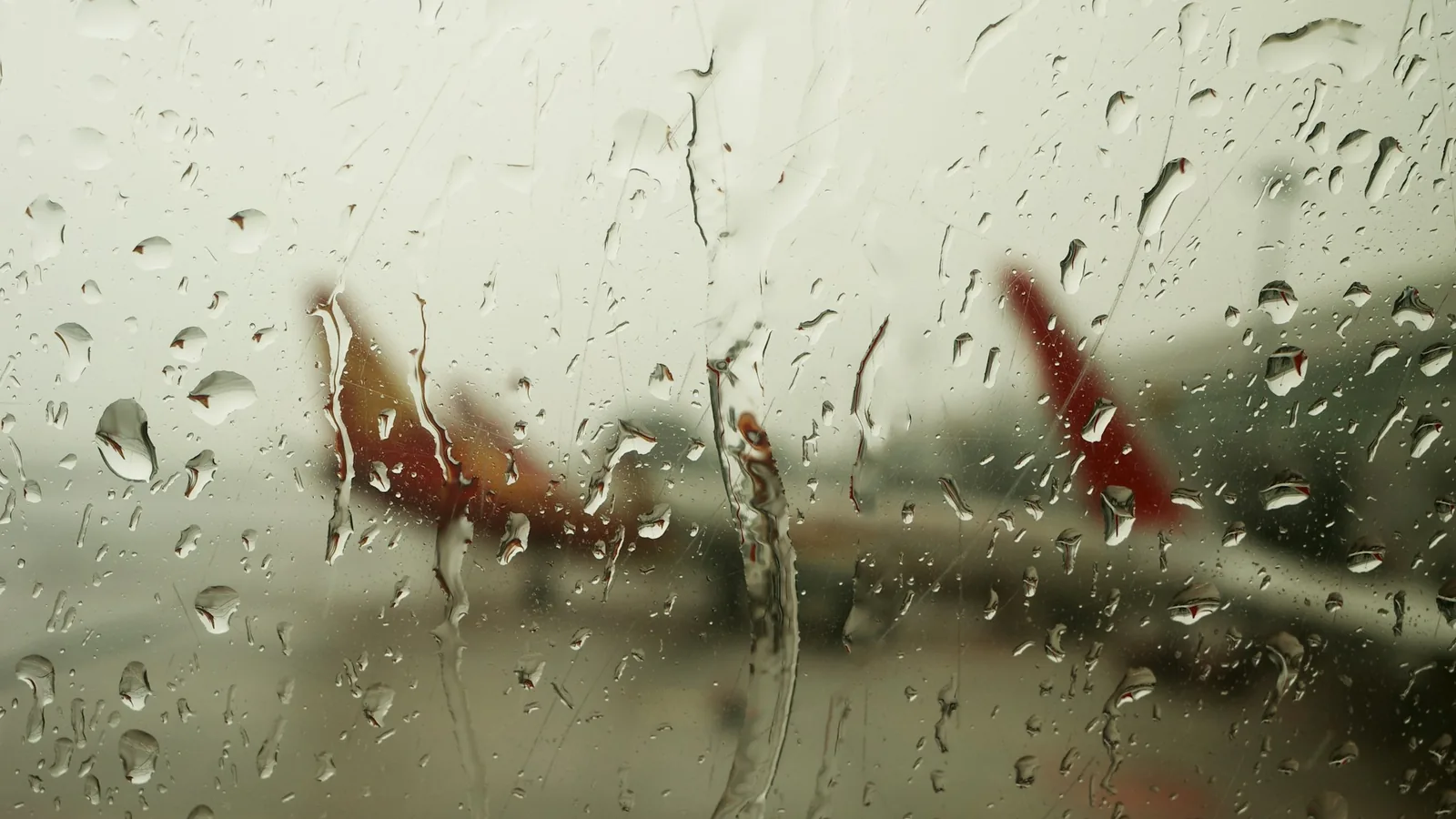
A Nor'easter Is Crashing the Busiest Thanksgiving in 16 Years. East Coast Hotels Are Watching the Wrong Day.
The FAA expects more than 417,000 flights between Monday and next Tuesday, the busiest Thanksgiving it has handled in 16 years. And a storm is rolling up the East Coast right on top of it. Most hotels near the big Eastern airports are bracing for a quiet Thursday. They should be bracing for Sunday.
Here's the shape of it. A low that formed in the Gulf on Tuesday is pushing rain into Florida and the Southeast today, then strengthening as it climbs the coast into Thursday. AccuWeather has Thursday as the peak day for cancellations, with its disruption outlook running from today through Sunday. That window is the whole point of this post.
Where it hits and when
Today is the Southeast's turn. Orlando and Miami were already in line for delays yesterday and today, with Atlanta and Charlotte joining this afternoon. Charlotte has already cancelled its Thanksgiving Eve parade because of wind and rain, which tells you how local officials are reading the forecast.
Thursday is when it reaches the airports that matter most for hotel volume. Forecasters name DC, Philadelphia, Newark, JFK, LaGuardia, Boston Logan and Detroit, with Chicago possible. The setup is 1 to 2 inches of rain across many lowland areas, gusts of 40 to 55 mph along the Mid-Atlantic and Northeast coast on Thursday and Friday, and a real risk of serious coastal flooding on barrier islands. Freezing rain or sleet may reach northern New York and New England on Thursday night, with wet snow in the Adirondacks and northern New England on Friday. Out west of the main storm, a narrow snow band from St. Louis toward the Quad Cities could drop 1 to 6 inches, locally more.
Sporadic power outages are possible along the coast and the Appalachians. If you have a generator, test it today, not Thursday morning.
And in Manhattan, the parade is on a knife edge. City rules ground the full-size balloons if sustained winds top 23 mph or gusts reach about 34 to 35 mph, and the morning forecast is flirting with that line. The call comes early Thursday.
All of this is still a forecast as of this morning. Storms shift. But you don't get to wait for certainty when 81.5 million people are on the move, which is AAA's number for this holiday week.
Why Thursday is the wrong day to worry about
Thanksgiving Day itself is usually soft for city hotels outside New York. Families are at someone's house, not in your lobby. A Thursday full of cancellations mostly hurts airlines and people trying to fly that morning.
The damage to hotels comes from the knock-on. Airlines that cancel hundreds of flights on Thursday don't have empty seats on Friday to absorb those passengers. Planes are already packed. Round-trip Thanksgiving fares are averaging about $400, roughly a third higher than last year, which is what full planes look like. So a Thursday cancellation can turn into a Saturday or Sunday rebooking, and every one of those travelers needs a bed somewhere in the meantime.
That's the hotel story. Stranded extensions near airports from Thursday night through Sunday. Guests who planned to check out Friday asking to stay until Monday. And Sunday, already the most fragile travel day of the year, carrying a backlog on top of the normal return rush.
Meanwhile, as of yesterday there was no comprehensive set of airline waivers for this storm. That means a lot of travelers are about to make their own rebooking decisions, often late, often angry, and often from your front desk.
The pricing mistake to avoid
Some airport hotels will see the compression coming and push rates hard on Thursday and Friday nights. I think that's a mistake, and not for sentimental reasons.
A family that gets stuck in Newark on Thanksgiving and pays a fair rate remembers you. A family that pays triple tells everyone, and they tell them in reviews you'll be looking at for two years. The demand will be there either way. You don't need to squeeze it.
Set a storm rate now. Something close to your normal weekend BAR, applied by the front desk without a manager call, for any in-house guest whose flight is cancelled. Put the same rate on a simple landing page for walk-ins and airline vouchers. You'll still fill, and you'll fill with goodwill instead of complaints.
What to do today
Pull every reservation with an arrival or departure between Thursday and Sunday. Flag anyone flying through the named airports. Then send them a short message before lunch: we're watching the storm, here's how to extend, here's what happens if you can't get here. That one email will save your front desk dozens of calls on Thursday.
Write down your no-show rule and make it generous. A guest who can't arrive because their flight was cancelled gets a date change, not a charge. Put that in writing to the team so nobody improvises on a holiday shift.
Think hard about staffing. Holiday rotas are already thin, and transit in the Northeast will be slow on Thursday and Friday. If key staff live far out, book them a room for Thursday night now while you still can. Housekeeping will feel the extensions on Friday and Saturday, not on Thursday, so that's where any extra hours should go.
If you're in New York, prepare two versions of your Thursday morning guest note: one for a normal parade and one for a parade without the giant balloons. Families who flew in for it will want to hear from you first, not from a news alert.
And for coastal properties from the Carolinas to Cape Cod, check your flood plan, move cars off low lots, and tell guests where the high ground is before the water arrives, not after.
The bigger lesson
Holiday storms aren't rare. They happen most years, and every year a lot of hotels respond like it's the first time. The ones that do well have the same few things ready: a saved report that finds affected arrivals in seconds, a pre-written guest message, a storm rate, a no-show rule and a staffing fallback. None of it takes long to build. It just has to exist before the forecast turns ugly.
This week the forecast already has. You've got today to get ready for Sunday.