Five Philadelphia Hotels Are Playing Chicken With a Strike. Kickoff Is Tomorrow.
Five Philadelphia hotels have until tomorrow to sign a contract or watch a picket line go up the same week half a million World Cup visitors arrive. Most of them are betting it won't come to that. That's a bad bet, and the people making it should know better.
UNITE HERE Local 274 set a citywide strike deadline of June 12. The five properties still without a deal are the Sheraton Philadelphia Downtown, the Wyndham Philadelphia Historic District, the Hilton Philadelphia at Penn's Landing, the Warwick Hotel Rittenhouse Square, and the Hilton Garden Inn Philadelphia Center City. Union president Rosslyn Wuchinich was blunt about the timeline: if there's no deal by the 12th, the strikes run "from the FIFA World Cup to the Fourth of July." That's not a one-day warning shot. That's a threat to bleed the single most lucrative stretch on the calendar.
And here's the part that should make every GM in the country sit up. This isn't just Philadelphia. The same week, more than 2,000 workers at SoFi Stadium in Los Angeles authorized a strike ahead of the US versus Paraguay match on June 12. In Seattle, 94% of Local 8 members at the Embassy Suites next to Lumen Field voted to authorize too. Three cities, one tournament, one deadline, all converging on the exact moment the buildings are worth the most they will ever be worth. This is coordinated, and it's deliberate.
Timing is the whole game, and labor knows it
There's a version of this fight that hotels win. It happens in February, in a dead quarter, when the property has empty rooms, time on its side, and no event forcing anyone's hand. The owner can absorb a slow standoff. The union can't sustain one. Leverage sits with management, and deals get cut on management's terms.
June 11, with the World Cup kicking off and 500,000 visitors and a projected $770 million in local economic impact landing on the city, is the opposite of that. Every empty room between now and July is gold. The buildings are about to print money. And the people who clean those rooms, run those desks, and flip a sold-out house between back-to-back sellout nights just got handed the one thing they normally never have: timing.
So when a hotel "holds the line" on raises right now, it's not being tough. It's confusing the calendar. Drawing a hard stand on a dollar-an-hour gap in the one month the union has maximum leverage is how you turn a wage negotiation into a revenue event. The math that made sense in the offseason flips completely when occupancy hits 100% and stays there for a month.
"We have contingency plans" is a sentence, not a plan
Every property under threat says the same thing. No disruption today, contingency plans in place, business as usual. It's almost always wishful.
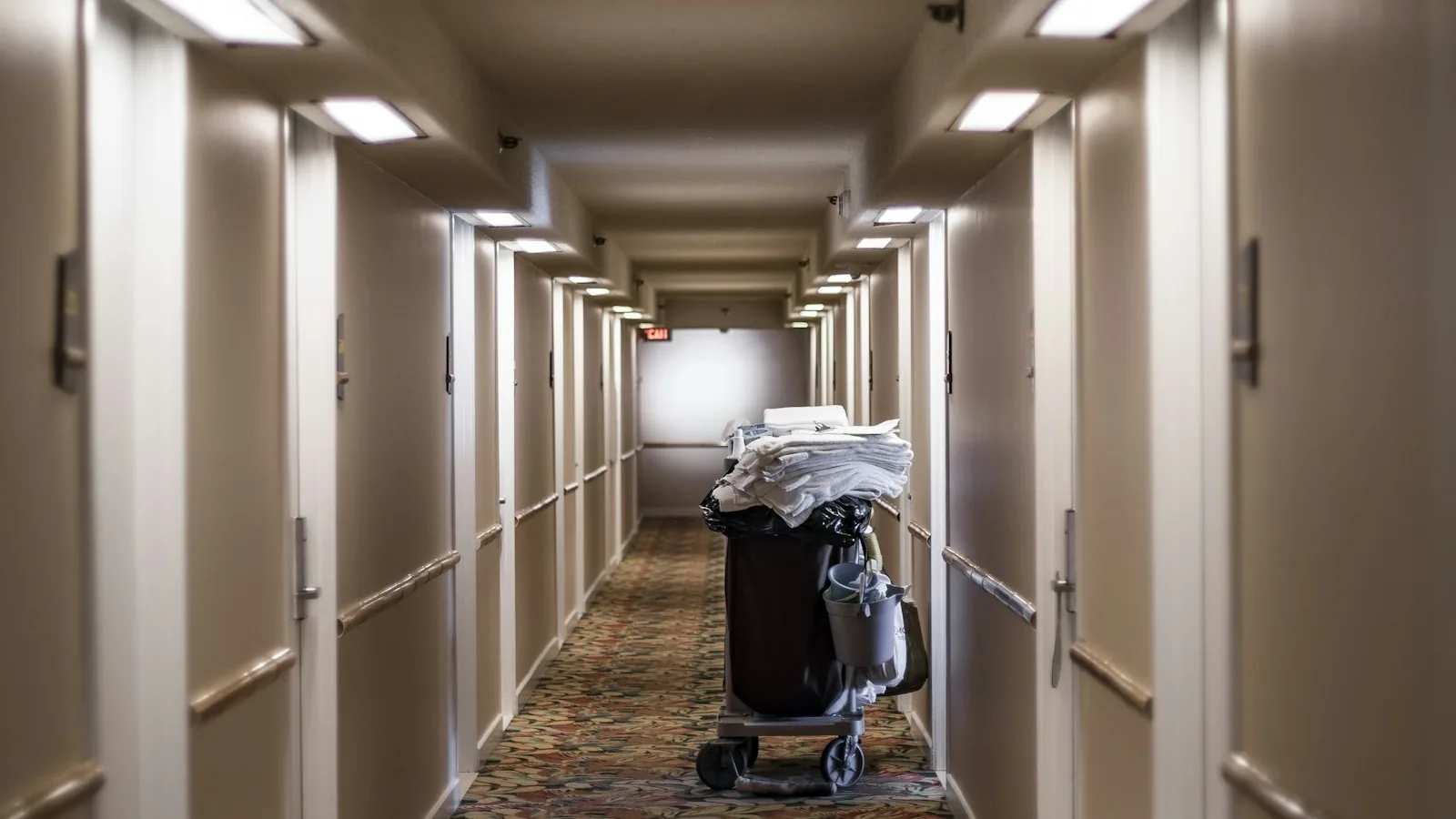
Contingency plans mean temp housekeepers who don't know the floor plan, managers working the front desk at midnight, and rooms turned slower than a fully sold house can absorb. That gets you through a quiet Tuesday. It does not get you through a World Cup, when check-out and check-in collide every single day, your guests are international, and a meaningful share of them are filming everything for an audience back home. The gap between "we coped" and "we got buried" is occupancy, and these five hotels are about to run the most demanding occupancy of their lives.
Then there's the picket line as a piece of physical infrastructure outside your front door. A downtown Philadelphia hotel with chanting workers and organizers on the sidewalk, in the most photographed month the city will see in a generation, is not a neutral backdrop. It's a set piece for every guest, journalist, and traveling fan walking past on the way to a match. That reputational hit doesn't wait for a quarterly review. It lands in real time, on Google and the OTAs, where a run of one-star reviews in June quietly reprices your July and August.
The captive-demand fantasy
The thinking operators fall back on goes like this: we're sold out, the guest already paid, the city is packed, where are they going to go. The honest answer is, down the street.
A guest stuck with no clean room, no working desk, and a protest outside reopens the app, cancels inside the window, and rebooks the property two blocks over that did its deal in March. You don't just eat the bad review. You hand the room back to Booking.com at the precise moment that room is worth more than it has ever been. In a normal month a service failure costs you a guest. In this month it costs you the highest-rate booking you'll take all year, and it hands it to a competitor who looks like a genius by comparison.
That's the real exposure. Not the wage bill. The wage bill is knowable, finite, and frankly small next to a month of World Cup rates. The strike is the open-ended one.
What this is actually about
Money is part of it, but read the demands and you'll see it's more. Local 274 is pushing for $30 an hour for non-tipped workers by January 2028, a 15-room daily cap for housekeepers, pension increases, affordable family health insurance, and specific protections against guest harassment. The room cap and the ICE-notification asks that keep surfacing across all three cities tell you the workforce is bargaining over working conditions and dignity, not just the number on the check. Those are harder to wave away than a raise, and they're not going back in the box after this tournament.
So the operators treating June 12 as a line in the sand are fighting the wrong battle on the worst possible day. The hotels that already signed, and several Philadelphia properties did, took the certain, finite cost over the open-ended one. That wasn't caving. That was reading the calendar correctly.
If you run a property anywhere near a major event this summer, the lesson is simple and it's free. Get your labor situation resolved before the demand spike, not during it. The contract you can negotiate in a soft quarter is always cheaper than the one you negotiate with a sold-out house and a film crew on the sidewalk. Philadelphia's five holdouts are about to learn that the expensive way, on live television, with the whole world watching the game next door.